The Return of Ruin: Godzilla Minus Zero and the Economics of Destruction
- Martin Gary
- Apr 15
- 3 min read

The newly released trailer for Godzilla Minus Zero—the follow-up to Godzilla Minus One—arrives not as mere spectacle, but as a continuation of a cinematic philosophy that has quietly challenged Hollywood orthodoxy. Where contemporary blockbuster trailers often rely on excess, this teaser leans into restraint: a slow reveal, ominous sound design, and the suggestion of catastrophe rather than its immediate delivery. It signals not just another monster film, but a deliberate extension of a filmmaking model that privileges tone, narrative weight, and disciplined craft over industrial scale.

To understand why this trailer carries such weight, one must return to the unexpected success of Godzilla Minus One. Produced by Toho on a reported budget of roughly $10–15 million, the film stands in stark contrast to Hollywood’s $150–200 million franchise machinery . Yet despite its modest cost, it generated over $115 million worldwide, becoming one of the most successful Japanese-language films in international markets . This disproportionate return on investment is not an anomaly—it is evidence of a structural efficiency embedded within the film’s production philosophy.

Crucially, Minus One achieved its scale through constraint. Director Takashi Yamazaki and his team relied on a visual effects unit of only around 35 artists to produce over 600 VFX shots . Rather than outsourcing across vast global pipelines, the production centralized its creative control, allowing for cohesion in visual language and efficiency in execution. Traditional techniques—such as miniatures and practical references—were integrated with modern CGI, reducing computational overhead while preserving tactile realism . This hybrid methodology evokes the legacy of tokusatsu filmmaking, where ingenuity compensates for limited resources.

Equally important is the film’s narrative architecture. Unlike many contemporary blockbusters that treat character as secondary to spectacle, Minus One situates its destruction within a deeply human framework—post-war trauma, guilt, and reconstruction. This thematic grounding amplified audience engagement and drove strong word-of-mouth, a key factor in its global success . The monster, in this context, is not merely an antagonist but a symbolic force—echoing nuclear anxiety and national identity, much like the original 1954 film.
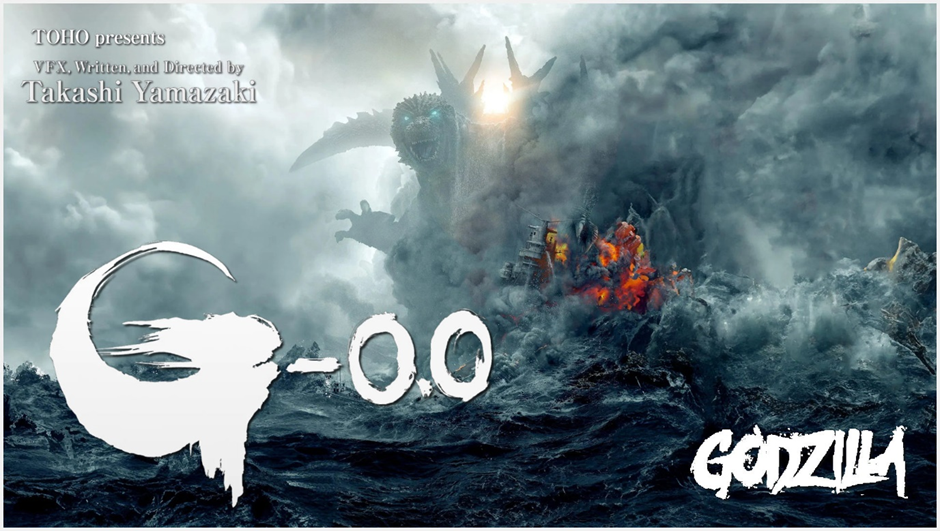
The Minus Zero trailer appears to extend this philosophy. Its pacing suggests confidence: a studio unafraid to withhold spectacle because it trusts the audience’s investment in mood and implication. In an era of algorithm-driven editing and overstimulation, such restraint is almost radical. The teaser’s ambiguity—its refusal to over-explain plot or scale—aligns with a broader aesthetic strategy: invite curiosity rather than exhaust it.

For Hollywood studios, the lessons here are both practical and philosophical. First, budgetary inflation does not guarantee visual superiority. Minus One demonstrates that carefully managed teams, clear artistic direction, and integrated workflows can rival—or even surpass—the output of vastly more expensive productions. Second, narrative investment remains a primary driver of audience engagement. Spectacle without emotional grounding may generate opening weekend revenue, but it rarely sustains cultural impact.
Finally, there is a lesson in authorship. By positioning Yamazaki as writer, director, and VFX supervisor, Minus One collapses the fragmentation typical of blockbuster production. This unified vision ensures that every technical decision serves the story, rather than existing as an isolated display of technological capability. It is, in effect, a return to cinema as a director-driven medium—even within the constraints of franchise filmmaking.

If Godzilla Minus Zero fulfills the promise of its trailer, it will not simply be a sequel—it will be a reaffirmation of a production ethos that challenges the economics of modern cinema. In a landscape dominated by excess, its greatest power may lie in what it chooses not to show.
Article by Martin Gary


Comments